Departments
Speech, Language & Audiology Department
Occupational Therapy Department
Psychology
Department
Livingstone
Developmental Unit
Occupational Therapy Department
The vision of the Occupational Therapy (O.T.) department is to provide an O.T. service that facilitates the development of learners’ individual needs through engaging, fun and purposeful activities. We endeavour to develop the child’s self-regulation and functioning at school, at home and in play. We work together with the broader team of professionals in our school in order to achieve the common goal of successfully unlocking potential and equipping each child for return to mainstream. Although therapy is individualised, it tends to involve working on skills within the following developmental areas: sensory processing; gross motor control and co-ordination; fine motor control and co-ordination; visual perceptual skills; and application of these components in functional tasks. Therapy is supported by a home programme, with parental involvement encouraged. The Occupational Therapists are Sensory Integration-trained or in the process of completing their Ayres Sensory Integration qualification.
The Occupational Therapists are trained to assess and treat the following areas of development:
- Sensory-motor skills
- Sensory-Motor Skills
- Visual Perceptual Skills
- Visual-Motor Integration
- Functional Classroom Carry-Over Skills
- Self-Care Activities (e.g. shoe laces, buttons, using a knife and fork, etc.)
- Play (facilitating and encouraging progression through developmental qualitative stages of play)
In addition to the above, the Occupational Therapists also offer the following therapeutic programmes or interventions:
- The Interactive Metronome (IM): The IM is an evidence-based intervention shown to improve attention, memory, timing, executive functioning, and motor skills.
- The Neuralign Programme: an interactive cognitive therapy programme designed to strengthen reading pathways.
Classroom-Based Sessions: Grade 1 and 2 learners receive a weekly classroom-based session focussing primarily on the development of their fine motor control, pencil grasp, colouring, cutting and handwriting skills. (facilitating and encouraging progression through developmental qualitative
The Sensory Room
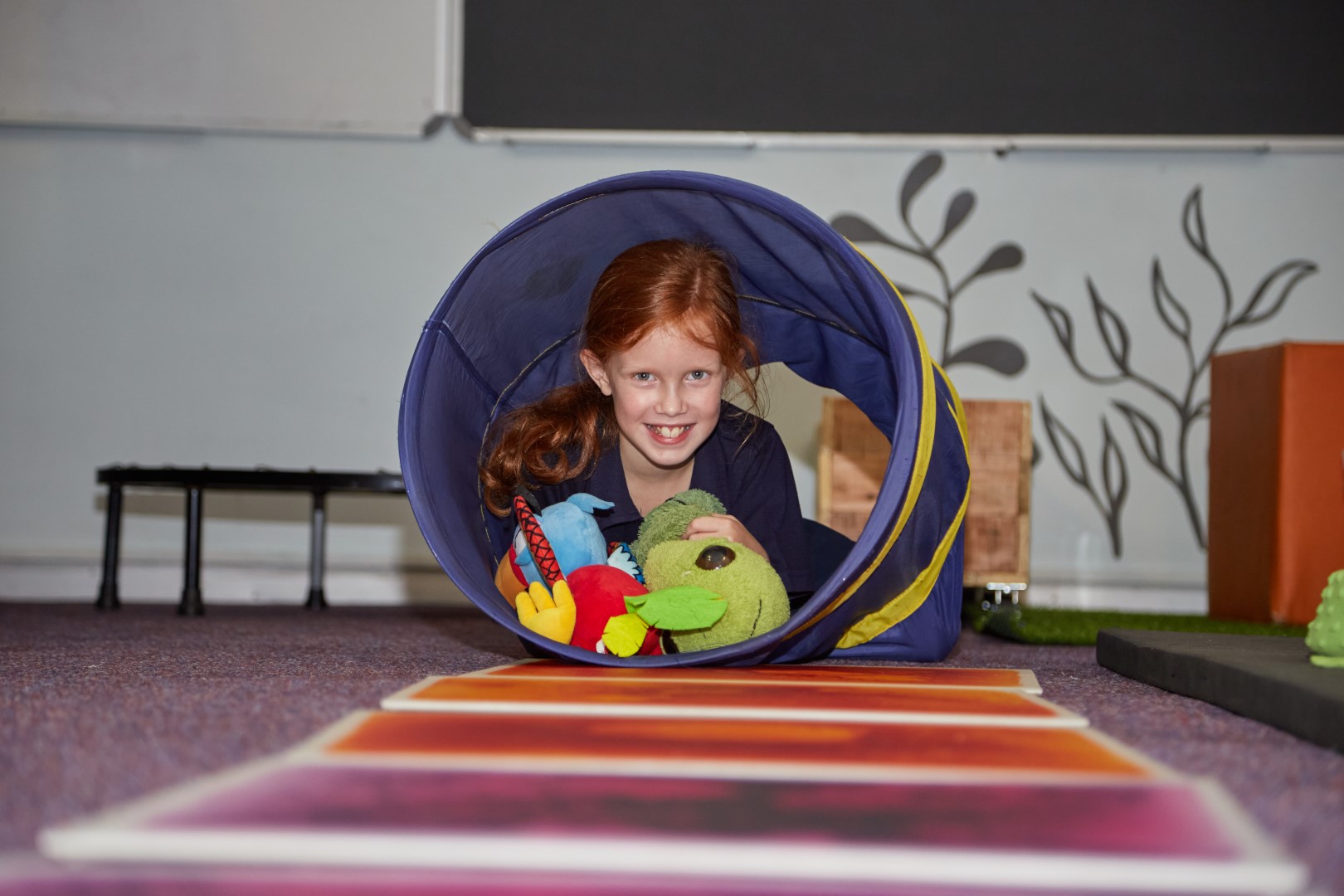
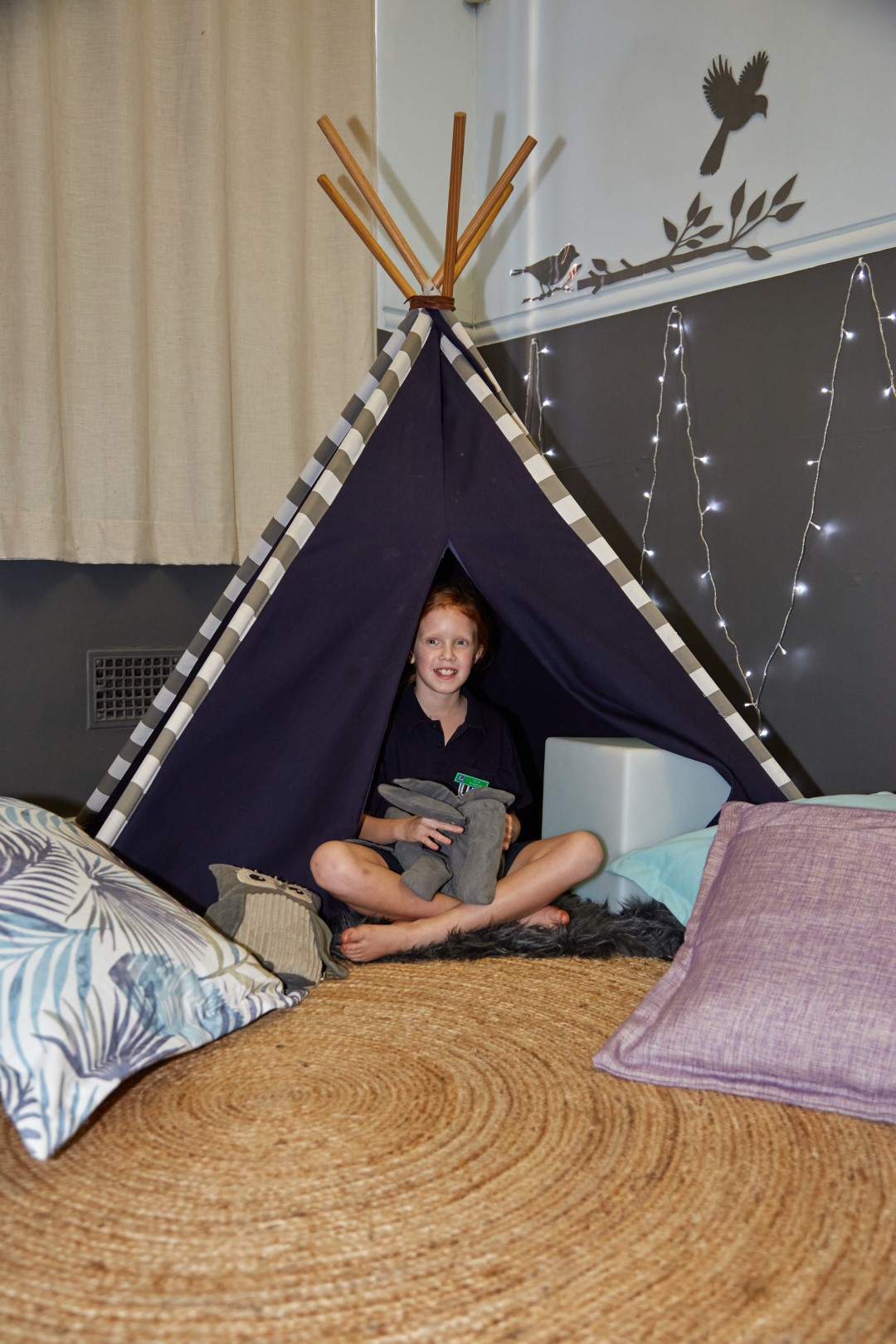
The Sensory Room was established in January 2022 by the Occupational Therapy Department and was based on the concept of a Snoezelen Room developed in the Netherlands. Snoezelen is a contraction of the Dutch verbs ‘Snuffelen’ (to seek and explore) and ‘Doezelen’ (to relax). A sensory room is a specially designed room, which combines a range of stimuli to help individuals develop and engage their senses, helping them to learn to interact with the world around them in a safe environment that builds their confidence. Shades of blue and grey were used in this room to create a calming, relaxing space, with various areas set up to provide a range of sensory experiences. Areas include a crash mat and trampoline for deep pressure and movement input, a tent with lights and pillows, a light-up ball pit and bubble tube for visual and touch input, and a tactile wall for learners to explore their sense of touch. Soft toys, cushions, weighted blankets, Lycra body suites and fiddle toys are easily accessible in this space, should a child wish to explore with these items. This non-threatening space encourages our learners to explore at their own leisure, under the guidance of a therapist, to discover what calms them and/or alerts them, and what they do and do not like. This Sensory Room also provides our learners with a space where they can calm and focus themselves, so they can be better prepared for learning and interacting with others.